Swaddling and sleeping bags
Swaddling has two purposes: It keeps your baby warm, and helps with the baby’s startle relexes.
Since loose blankets are not recommended under safe sleep guidelines, use a swaddle or sleeping bag as a safe alternative for warmth.
Babies under 6 months will often move their arms during sleep, this is caused by the Moro reflex and is normal young infant behavior. However, their own movement can wake them up. Restricting their range of movement generally make a newborn move comfortable and makes them sleep better.
Swaddling is optional and brings no extra benefits other than comfort, you can use a sleep sack as early as you want. For example my daughter hated being swaddled and kept wiggling herself out, we transitioned to a swaddle sleep sack during first or second week after arriving home.
Swaddling mistakes
A swaddled baby must always sleep on their backs!
Any infant younger than 1 year should be placed to sleep on their back to avoid re-breathing and positional asphyxiation but this is especially important for swaddled babies. Swaddled babies can’t move their arms in order to push and reposition themselves drastically increasing risk of re-breating or positional asp
Stop swaddling when baby shows first signs of rolling
Infants typically begin attempting side-to-side rolling between 4 and 6 months of age. If a swaddled infant rolls into a prone (face-down) position, restricted arm movement prevents them from rolling back, creating a high suffocation risk. At this stage you should transition to a sleeved or sleeveless sleeping bag that allows free arm movement.
Both safety rules above also apply to “swaddle sleep sacks” or anything that restricts arm movements. Once a baby can “get face down” limiting their arm movement becomes a SIDS risk factor.
Do not restrict leg movement
Do not wrap the legs. Baby’s legs and hips should have full range of motion. Restricting leg movement was a common practice in the 19th century and is still common in some parts of the world, however this practice has been shown to cause hip-dysplasia (abnormality developed hip joint).
Traditional swaddling, which implies restrictive immobilisation of the infant’s lower limbs with the hips in forced extension and adduction, has been shown to be a risk factor for Developmental Dysplasia of Hip (DDH). PMC8688658
Traditional swaddle
Versatile and cheap but requires the most practice to master.
Around the chest the swaddle should be tight, but not as tight as to restrict breathing. Two or three fingers should fit between baby’s chest and the swaddle, this is known as the “two finger rule”. Do not wrap the legs.
An excellent video tutorial Swaddle Your Baby Like a Pro: Pediatrician Tip from The Doctors Bjorkman. (This channel is a great general learning resource by the way)
Velcro swaddles
Very similar to a traditional swaddle but much easier to use. Besides requiring less dexterity, it does not allow the caretaker to use it incorrectly. Unlike old-school swaddles, velcro swaddles come in different sized for different baby height and weight.
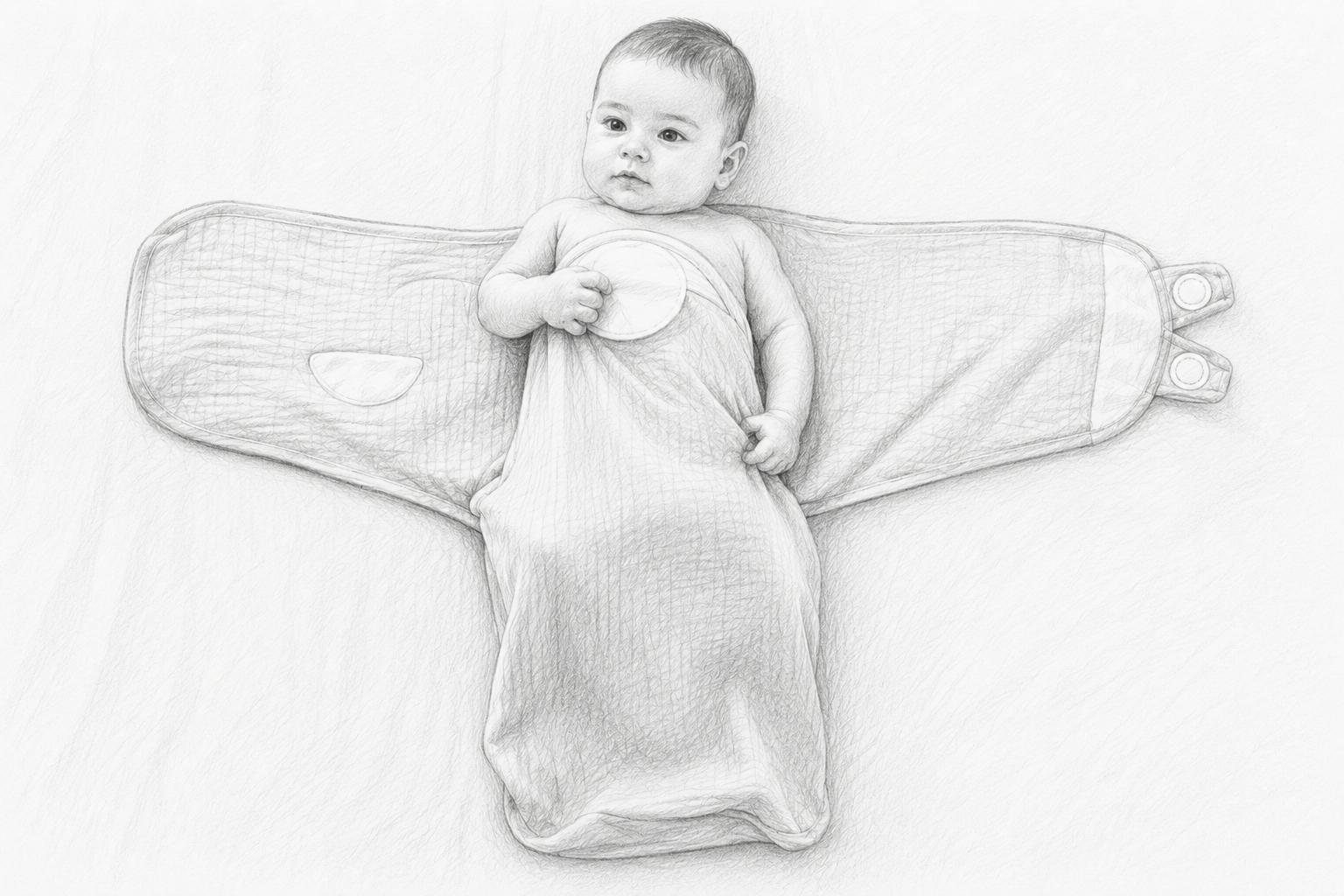
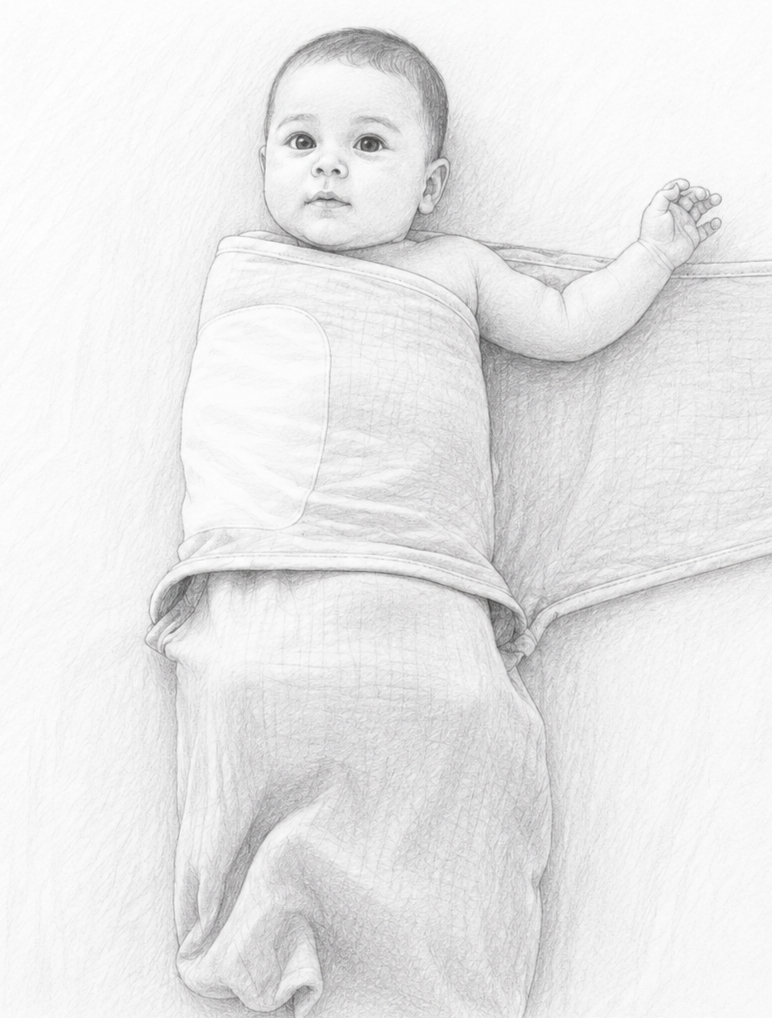
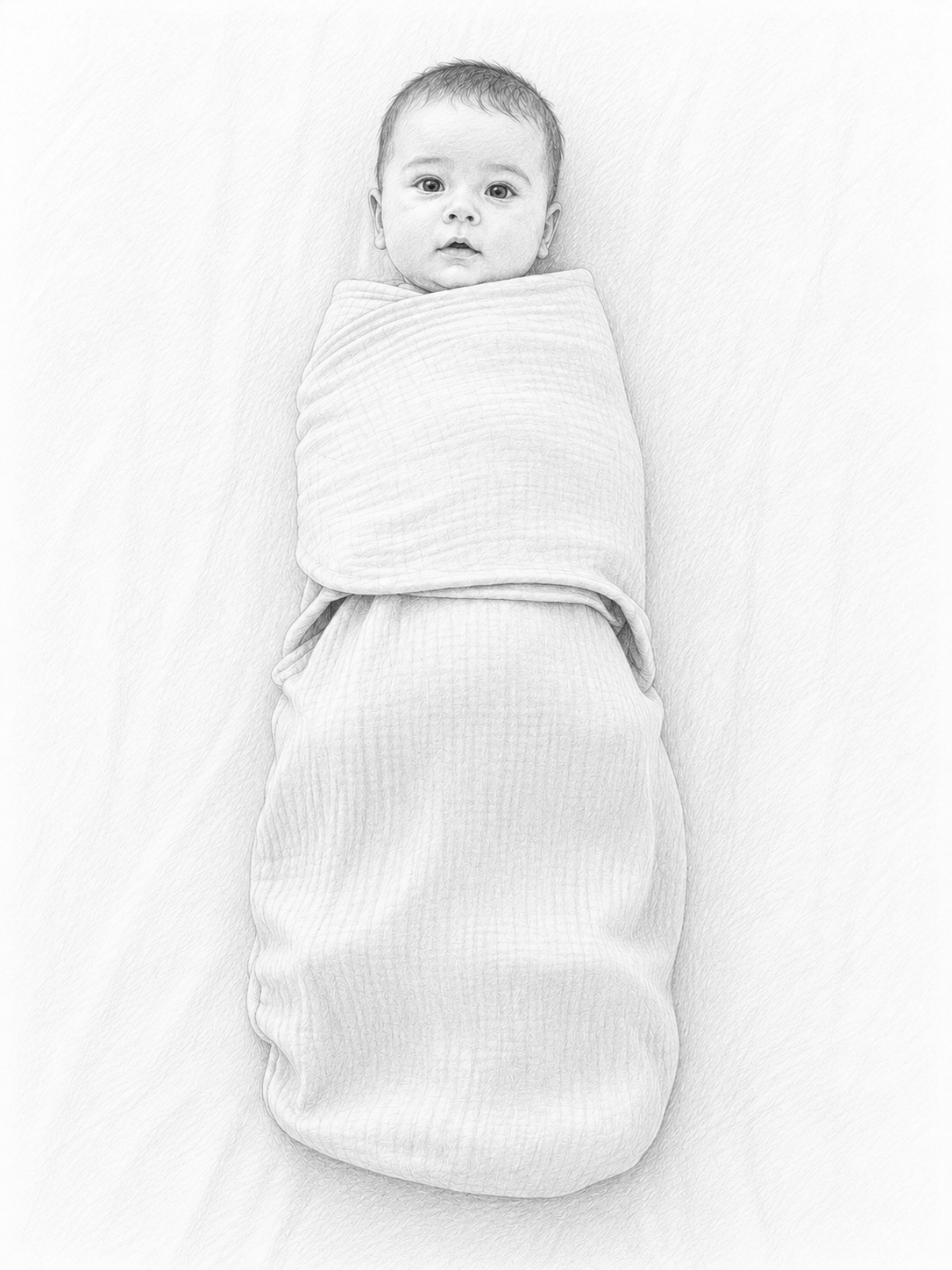
Swaddle sacks (arms-up)
These are a middle of the road option. They provide enough restraint to prevent the Moro reflex from waking up the baby, but they still allow some level of movement for babies that do not like being fully restrained.
In our personal case this option worked best: my daughter hated being motion-restrained and had a strong preference to sleep with her hands up. This looks more like a sleeping bag, but it is still a swaddle and use should be stopped when baby shows signs of rolling.
Some models labeled as “transition bags” allow the option to have one or both arms out of the sleeping bag. This is useful for accommodating your baby to standard non-swaddle sleep sack.
Sleeping bags
Transition to these when your baby starts showing signs of rolling on their own. At this stage (usually 4-6 months) free arm movement is important for safety and the Moro reflex will mostly disappear.
These can be used up to any age.
TOG rating
A sleep sack or swaddle will normally come with a TOG rating (Thermal Overview Grade). This should tell you what the ambient temperature this sleep bag was designed for, higher the TOG the warmer the fabric.
This is a chart from ergopouch of different ratings for different ambient temperatures.
While a good point of reference there is no “official” chart telling you which TOG to use for each ambient temperature. Different manufacturers will publish their own charts, which will slightly differ. Treat the TOG rating as a general guide, not a strict rule.
Check baby’s chest and back to gauge if they are too cold or too warm and adjust accordingly.