Paced bottle feeding
Unlike traditional bottle feeding which uses continuous flow, paced feeding replicates breastfeeding’s rhythm of suck–swallow–pause. While this technique is often used to prevent nipple confusion in babies who switch between breast and bottle, its advantages make it a good choice for exclusively bottle-fed babies as well.
The core goal of this technique is to reduce the flow of milk, requiring the baby to actively suck to extract it. This is a shift from traditional feeding, where gravity does the work and milk is essentially poured into the baby’s mouth.
How to
A paced bottle-feed should typically take around 10-20 minutes, similar length as a breastfeeding session. These are not hard numbers, just general reference points to queue you in whether the pace is right.
The baby should be sitting semi-upright in your lap at around 50 degrees angle. Always use your hand to support their neck and upper back.
Alternatively you can place the baby laying down and sideways on a pillow in your lap. They should be facing to the side with their backside touching your abdomen. In my experience this is more conformable both for the baby and the caregiver. The side-laying position is especially good for night feeds since it allows to eat while drowsy.
After placing the baby, touch the bottle tip to their upper lip, and wait for the baby to open the mouth and accept the bottle.
Maintain the bottle is a somewhat horizontal position.
The bottle should be inclined enough so the tip is always full but not as inclined so gravity forces the milk out of the bottle.
The actual angle of the bottle needs to be constantly adjusted depending on how much milk is left in the bottle.
A good litmus test for the correct angle: The tip of the teat is full, the base of the teat is not.
Bad angle examples:
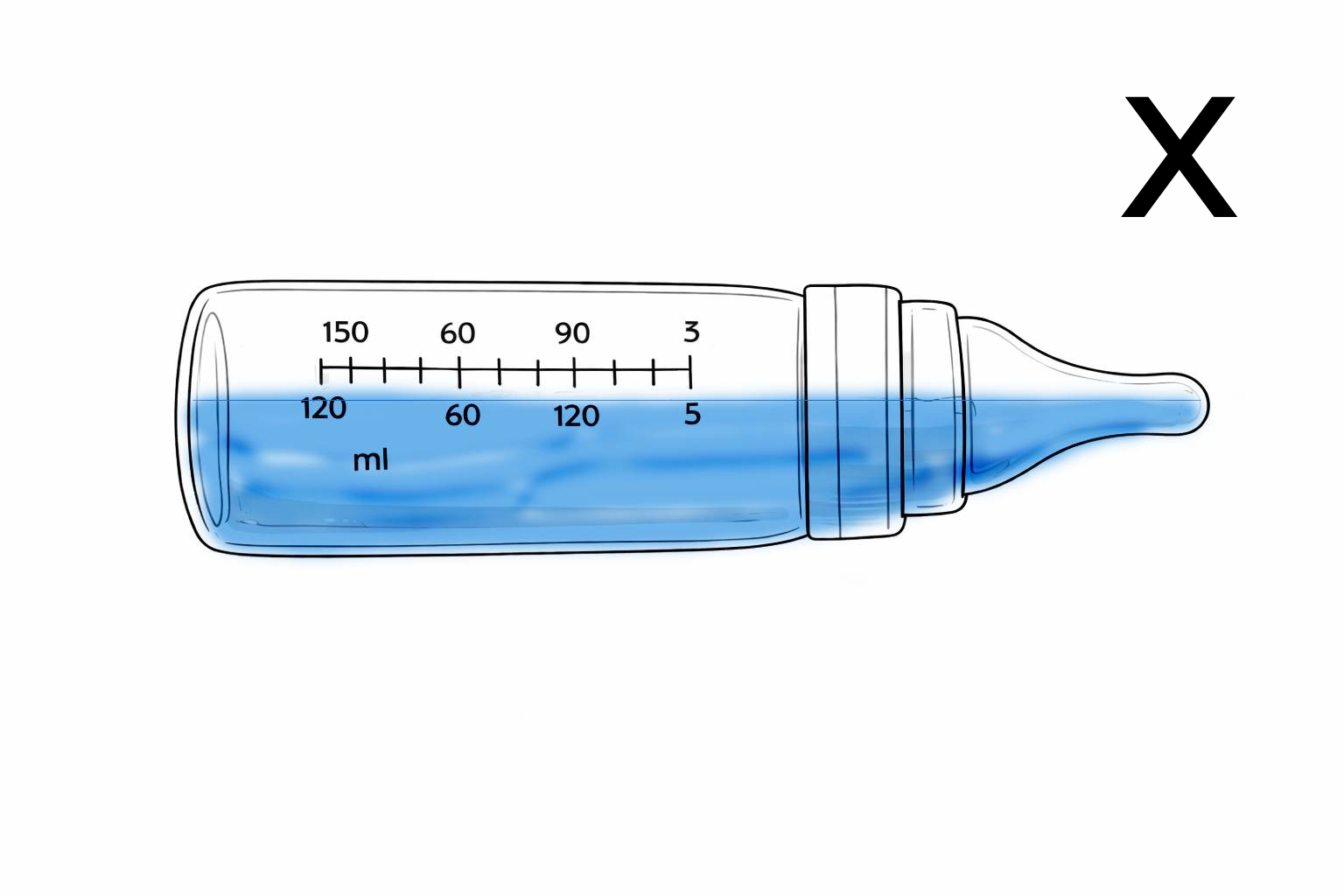
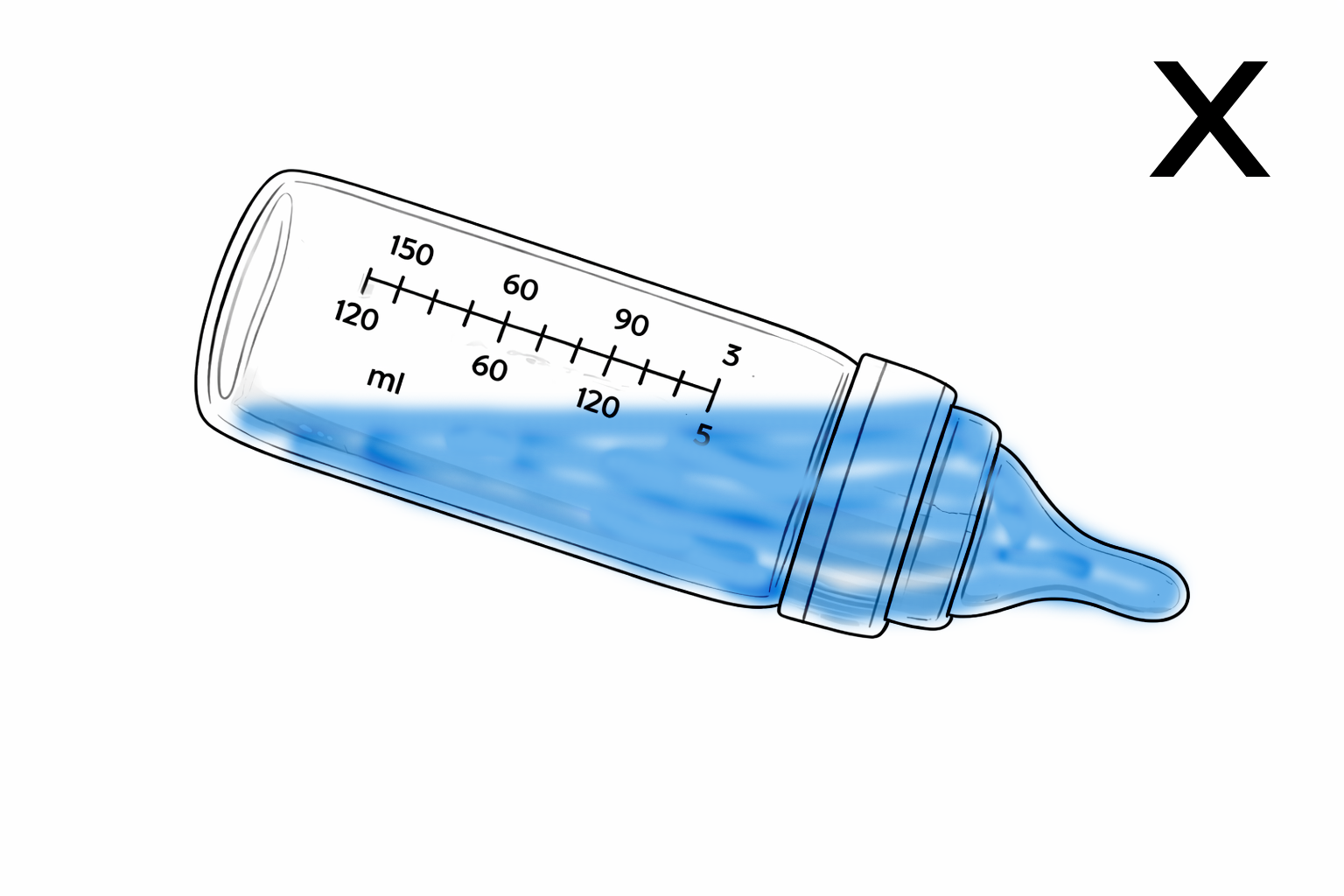
In the picture to the left the angle is not steep enough, the tip is not full. The baby should ingest air together with the milk, it causes digestive discomfort.
In the picture to the right the angle is slightly too steep, the base of the teat should not be full. A steep angle can make your baby take too much milk in one gulp.
Good angle
In the picture above the angle is correct: The tip is full so no air will be ingested. Bottle is not too inclined so that gravity forces milk out of the teat.
Let the baby suck on the bottle for around 20-30 seconds, then lower the bottle to a horizontal position so the nipple tip
is totally empty. This simulates the breastfeeding let-down pause.
Note: During pauses the baby might gulp air by sucking on the empty teat, this is ok.
Counterintuitively they swallow less air with a fully empty teat than they would have with a partially filled teat.
If the air swallowed in such a manner becomes problem for you, you can remove the bottle all together from their mouth during breaks.
This did not work for me, my daughter got very angry every time I tried removing the bottle from her mouth.
This is an excellent short video demonstration of paced bottle feeding.
Advantages of paced bottle feeding
Prevents over-feeding
You might have heard that “you can’t overfeed a breast-fed baby”. Extracting milk from a breast is an active process, when the baby stops being hungry they can just stop sucking and the meal ends. Receiving milk from a bottle with traditional bottle feeding techniques is a passive activity, gravity pulls the milk into baby’s mouth and their only option is to swallow it. By letting the baby “do the work” and extract the milk by themselves the risk of overfeeding is eliminated.
Reduces Gas and Reflux
Because the milk flow is not continuous, and we include frequent pauses for breathing, the baby avoids gulping or gasping for air. This controlled pace ensures the baby ingests significantly less air, which helps prevent digestive discomfort.
Avoids nipple confusion/flow preference
(This applies only to babies who switch between breast and bottle)
Bottle nipples require less effort the active sucking needed to trigger milk letdown. Flow preference refers to the situation where the baby gets accustomed to the faster flow and refuses to breastfeed. By incorporating regular breaks and encouraging a natural suck–swallow–pause rhythm paced feeding lowers the risk of your baby developing bottle preference .
Prevents the baby choking on milk
Especially early on, some babies have difficulty managing breathing and eating at the same time.
They will breathe in while trying to swallow at the same time, which makes them choke.
Reducing the flow of milk and offering constant pauses helps them manage better the suck–swallow–breathe rhythm.