Pacifiers
Deciding if you should introduce a pacifier and when to do it is highly situational.
Yes, offering a pacifier before sleep is recommended by the safe sleep guidelines, but the same public health officials acknowledge that introducing one too early can have negative effects on breastfeeding (if this is one of your goals).
In this chapter I will outline the key factors at play, so you can decide for yourself what to do.
In addition, I highly recommend reading the Recommendations for the use of pacifiers from the Canadian Paediatric Society as it treats the topic in much more depth.
Safety and general considerations
Independently of pacifier type and when it is introduced there are some safety rules that must be followed.
Safety
- The pacifier shield should be large enough that it cannot be entirely pulled into the baby’s mouth. Using a pacifier with an undersized shield poses high choking risk.
- Pacifiers degrade with use. Before offering, briefly inspect for cracks or parts coming loose. if you see any structural damage discard it. (We had 2 pacifiers cracking during 1 year).
- Do not attach the pacifier with cords or ribbons to the baby’s clothes or bed during unsupervised sleep. This poses strangulation risks.
- Never forcibly introduce a pacifier into a sleeping baby’s mouth.
The general considerations are mostly about what to look for when buying it. However, it is worth noting that each baby has their own preferences, you can’t force a baby to accept a specific pacifier.
General Considerations
- Each pacifier comes with a manufacturer’s age recommendation (0-3, 3-6, 6-12) on the box. If you are concerned about the sizing these are some rules of thumb.
- A pacifier that is too big will cause gagging, excessive drooling and its shield will be resting on your baby’s nose.
- A pacifier that is too small will leave imprint marks on the baby’s cheeks and nose. The baby will have difficulties holding it in their month and is likely to spit it out.
- Prefer soft silicone for the pacifier tip.
- A pacifier made from tougher materials creates more strain on mouth muscles.
- Latex can cause allergic reactions and is prone warping when sterilizing.
- Most silicone pacifiers from reputable brands are made of BPA-free food grade silicone (they will brag about it on the box).
- Avoid unnecessary weight, like plastic decorations on the shield. The extra weight makes it harder to keep in the mouth thus less comfortable.
- The shield should have perforations for airflow.
Breastfeeding and round pacifiers
Suction on a pacifier is mechanically different from a breast. To establish an effective breast latch, your baby needs to shape their mouth and tongue in a specific way that is different from the way they suck on a pacifier Introducing a pacifier too early can cause your baby to get confused and appear to “forget how to latch”, this is usually referred as nipple confusion
If your goal as a family is to breastfeed, the standard recommendation lactation consultants is to introduce a pacifier only after establishing strong breastfeeding patterns (usually 4-6 weeks).
On the other hand, if you are bottle-feeding you can introduce the pacifier from directly from birth. Extracting milk from a bottle demands less skill and effort from a newborn. In addition, a wide selection of bottle shapes exist, if one bottle teat does not work for any reasons you can easily try another. This is why you will sometimes see the term “pacifiers for bottle-fed babies” thrown around: with nipple confusion not being a relevant factor, the manufacturers can focus their design efforts elsewhere.
For breasted babies you should opt for pacifiers that:
- Are symmetrical on all axes.
- Have a rounded tip and a gradual slope.
- Have a wide base.
- Are made of soft silicone.
These designs try to emulate the shape of a nipple, hence should help prevent nipple-confusion. Ninni-co and Dr Brown’s pacifiers seem to be a popular choice in this category (the exact brand does not matter, the shape does).
Example of good shapes:
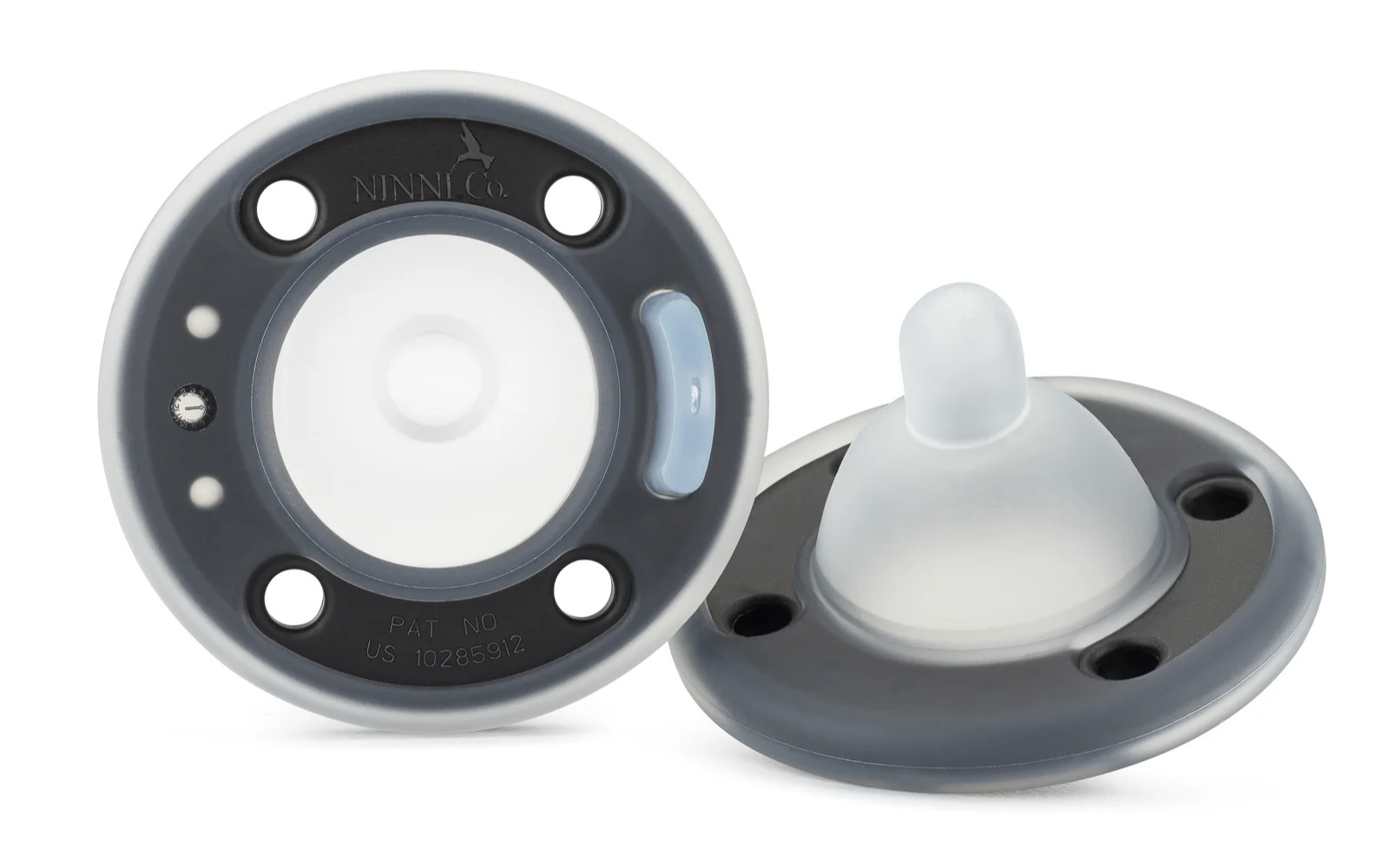
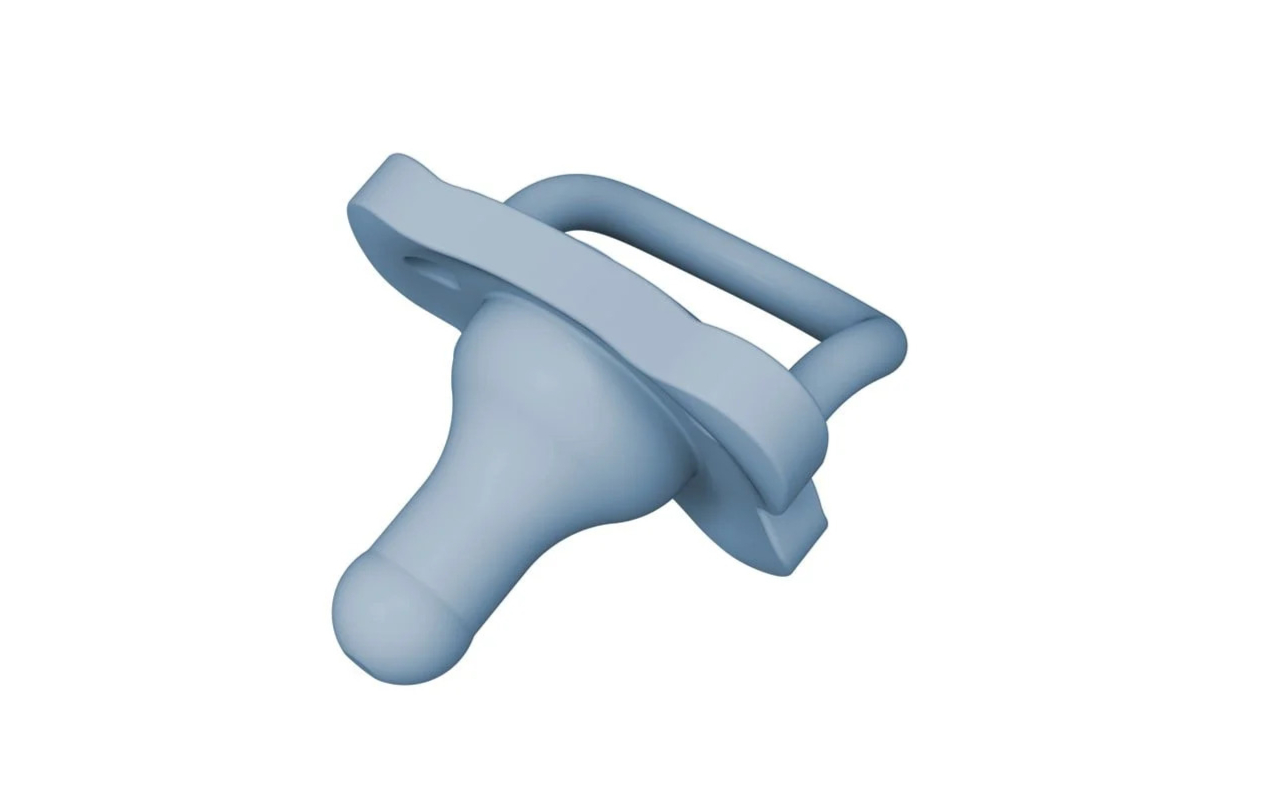
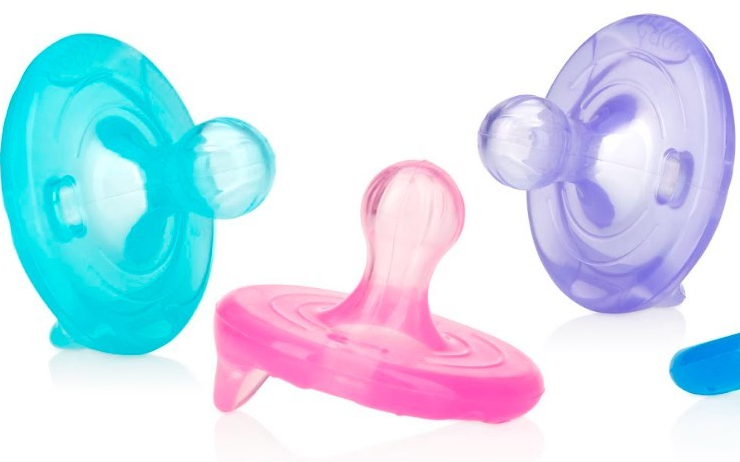
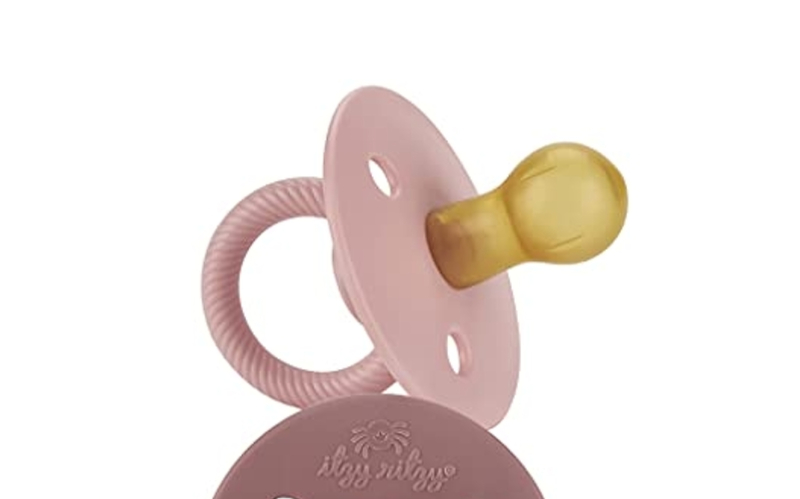
Avoid pacifiers with a significant “bulb” on the tip and shallow bases, these are sometimes referred as “cherry shaped”. As far as I understand they are easier for the baby to keep in their mount, but they can cause a shallow latch.
Example of bad shape:
Anatomical pacifiers and moth development
Anatomical pacifiers (sometimes called orthodontic) style of pacifier is advertised as the better option in supporting mouth development and preventing misalignment of the teeth. They are asymmetrical and feature a narrower base with a wider tip.
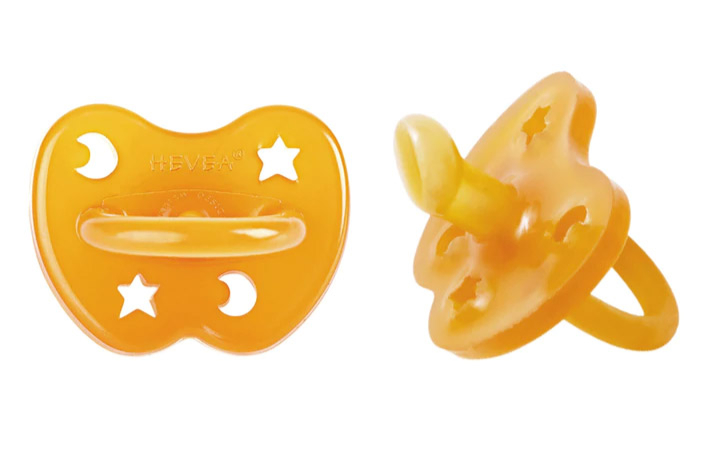
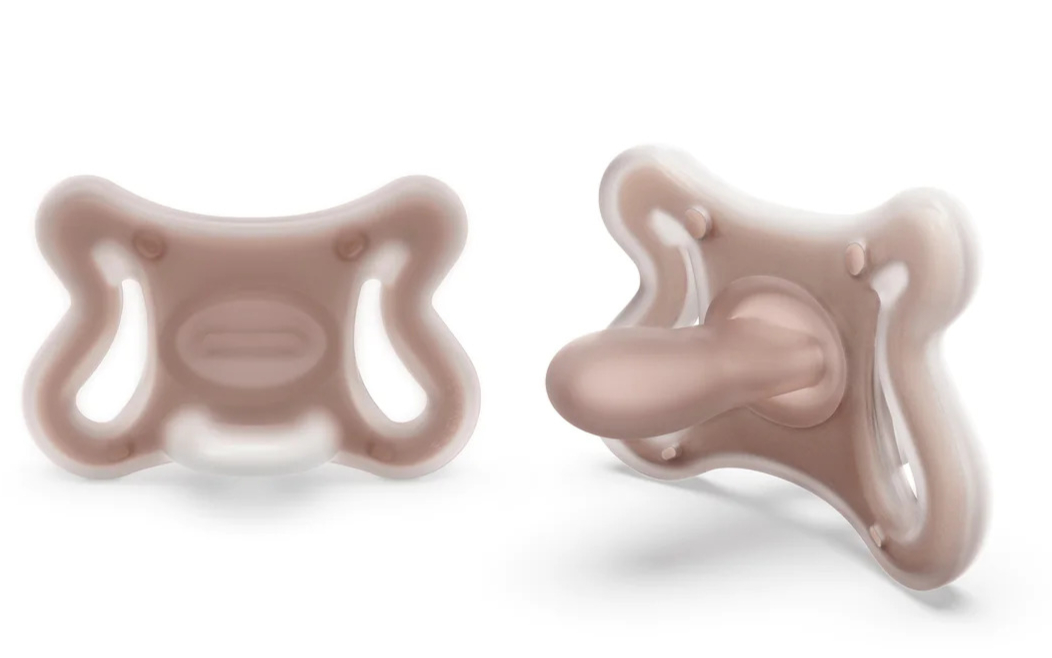
However, there is little to no scientific evidence supporting this claim. The only relevant study I could find on the subject states the opposite.
According to Adair et al.: “No clinically significant differences were found between 24- to 59-month-old users of conventional and orthodontic pacifiers with respect to sagittal, vertical, and transverse occlusal relationships.”
On the flip side there seems to be consensus among pediatric dentists that early weaning and limiting the hours of use per day has the highest positive impact on preventing mouth and denture development issues.
For example The American Academy of Pediatric Dentistry in their
policy from
recommends weaning at 18 months with a hard cut-off at 36 month to avoid crossbite, overbite and dental malocclusion.
If mouth development is one of your concerns early weaning and limiting use is the better option.
When to wean off
There are several recommended ages when to wean off the pacifier. None of these except for the last one (3 year mark) are “set in stone”. The correct timing will depend on your particular case.
- 6-7 months: By this age most babies can self-soothe without a pacifier. At this age they have lower emotional attachment towards things (pacifiers included) making the weaning process easier.
- 12 months: The American Academy of Pediatric Dentistry states that prolonged pacifier usage after one year of age can increase the risk of acute otitis media (ear infections). Sources AAPD guidelines , Warren et al. and Jackson et al.
- 18 months: Pacifier use after one year and a half was linked to crossbite, overbite and improper teeth alignment.
- 36 months: Using a pacifier after the age of 3 can cause long-term dental issues which require medical intervention to fix. This age is “firm cut-off” point.
In our personal case, we used the pacifier only during sleep and had no complications, neither with ear infections nor with misaligned teeth. Since our daughter used it rarely she did not develop emotional attachment to it and simply stopped asking for the pacifier at around 16 months of age.
Regarding preterm babies
There is a special consideration when it comes to preterm babis that spend time in intensive care after birth. Your neonatologist will most likely suggest introducing a pacifier directly after birth.
When a baby’s moth muscles are not sufficiently developed to extract milk by themselves they will initially receive nutrition via a gastrointestinal tube. Removing the GI tube is one of the priorities on the neonatologist’s list. By introducing a pacifier early,
- The baby gets to exercise their mouth muscles, eventually developing the ability to feed by either breast or bottle.
- Sucking on a pacifier mitigates the risk for the baby loosing their sucking reflex.
- The soothing effects provided by pacifier helps with pain management during procedures and general emotional regulation.
You can read more on the topic here.
Warning
There is no advice in this section. The goal is only to provide some context for people that are in that situation and are wandering what’s the reasoning behind their doctor’s decision.